The Beat Between Us: Joining Japanese Crowd Cheers Without Stepping on the Punchline
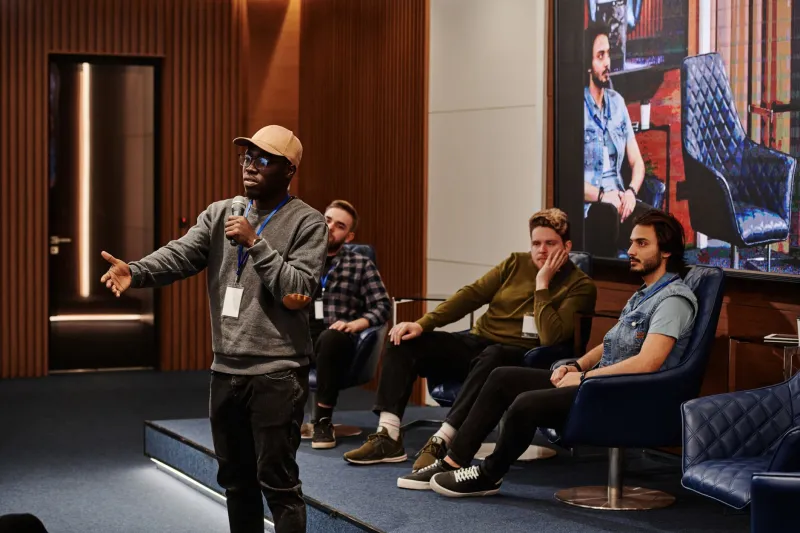
Meiko Haigou has a theory about convention audiences. A crowd is not a wall of noise. It is a conversation with a very short memory and a very big heart. One well-timed clap can tell a performer the room is with her. One mistimed shout can tell her the room is performing for itself. The difference is not Japanese fluency. It is listening.
That is the spirit behind this little field guide. You do not need to memorize a phrasebook to enjoy a Japanese call-and-response moment at a U.S. convention. You need a few useful cheers, a sense of when they fit, and the willingness to follow the performer rather than lead the parade.
Start with the room, not the phrase
Meiko’s first rule is almost disappointingly simple: wait for the invitation. Sometimes it is verbal. A performer asks, Minna, genki? Are you all doing okay? Sometimes it is physical: a tilted microphone, a pause after a song, a hand cupped to an ear. Sometimes it is just a grin that says, I know you know this one.
If none of that happens, enjoy the silence. Silence is not a failed cheer. It is often the most respectful applause in the room, especially after a serious question about a difficult role or a story about a lost colleague.
The cheers worth keeping in your pocket
Here are the ones Meiko tends to mention when fans ask what actually helps from the audience side.
Hai! (yes)
Short, bright, and easy. Use it when a performer asks a yes-or-no question and the room is clearly playing along. Do not use it as a punctuation mark after every sentence. A wall of hai can turn a chat into a quiz show.
Mō ikkai! (one more time)
This is the classic request for a repeat, an extra line, a second run through a chorus. The pronunciation is roughly moh EE-kai. Pair it with a steady clap instead of shouting it over a quiet moment. Save it for the end of a song, the close of a story, or a performer who is visibly teasing the room. Never use it to demand unpaid labor after a panel has clearly wrapped.
Saikō! (the best)
Useful after a performance, a perfect joke, or a bit of voice acting that makes the room sit up. It lands best when it comes from genuine delight rather than a need to be heard. One clear saikō from the back row can feel warmer than twenty scattered shouts.
Kawaii! (cute)
A staple at anime events, but context matters. It fits a character reveal, a plush prop, a chibi drawing, a deliberately silly pose. It does not fit a real person who is trying to answer a serious question about her career. Meiko’s version of this cheer is usually a delighted little laugh first, then the word. The laugh is the permission slip.
Ganbatte! (do your best)
A warm bit of encouragement before a challenge: a difficult line, a live reading, a game with a forfeit. It is not a heckle and it is not a command. Say it like you are cheering for a friend at the start of a race, not like a coach with a whistle.
Arigatō! (thank you)
The safest cheer in the world, and often the most meaningful. Use it at the end of a panel, after a signing, or when a performer has just shared something personal. It gives the room a graceful exit.
If you remember only one bonus word, make it encore. Japanese crowds often use the shortened ankōru, but in the U.S. the English version works fine. The key is timing. An encore is a gift, not a vending machine transaction.
The clap that keeps everyone together
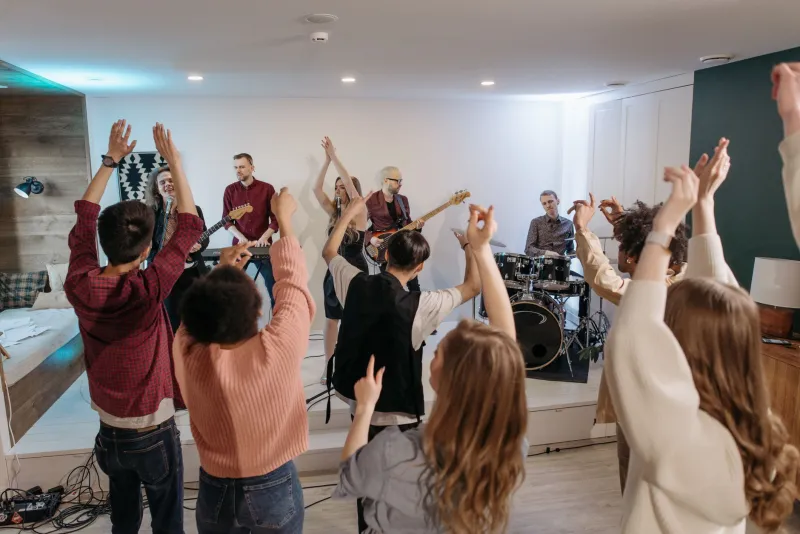
Japanese crowd cheers often live inside a clap rhythm. The exact pattern changes by song and by room, but the principle does not: listen for one full cycle before you join. Meiko calls this the three-clap rule. Hear the room clap three times, feel where the pause lives, and then add your hands. If you start on the wrong beat, do not panic. Soften your clap and find the pocket again.
The worst thing you can do is speed up. A crowd that races the performer is no longer a crowd. It is a metronome with anxiety. A crowd that holds the beat together gives the person onstage something to lean on.
When not to cheer
This is the part that matters most. Do not shout a cheer over a translator. Do not use mō ikkai during a Q&A just because you want more stage time. Do not turn a quiet story into a call-and-response bit because the silence feels awkward to you. The performer is not a playlist. She is a person reading the room, too.
Meiko has a gentle way of putting it: the audience is allowed to be enthusiastic, but it is not allowed to be the main character. Cheering is a hand extended, not a hand grabbing the microphone.
A story from the same beat
One of Meiko’s favorite convention memories is a screening where the audience picked up a clap she had used earlier in the day. She had not planned it as a bit. It was just a nervous habit, a way to fill a pause while the projector caught up. By the end of the screening, the room was clapping it back at her in the dark. She laughed and said, You remembered that? For the rest of the panel, every time she paused, someone gave the rhythm a tiny start. She would tilt her head, wait, and then answer the question. No one had to explain the joke. The room had built a small language together.
Another time, during a voice-acting demonstration, a fan gave a perfectly timed hai after Meiko asked the room if a line sounded better one way or another. She pointed toward the back, delighted. That one. That was the one. The moment worked because the fan had waited for the question, answered it, and then let the panel continue. Call-and-response is at its best when it leaves room for the next thing.
Your pocket card for the next panel
- Wait for a cue: a question, a pause, a hand to the ear, a grin.
- Start with hai and arigatō. They are almost always safe.
- Use mō ikkai at clear endings, not during quiet stories.
- Join a clap rhythm only after you have heard one full cycle.
- If the room goes quiet, let it. Silence can be a form of respect.
- Follow the performer’s energy, not your own excitement.
Meiko does not need a U.S. audience to sound Japanese. She wants a room that sounds like it is paying attention. That is the cheer that travels best: not the loudest one, but the one that says, we are here, we heard you, and we are ready for the next beat.