Loving the Ones You Love to Hate: Meiko Haigou on Giving Villains Their Voice
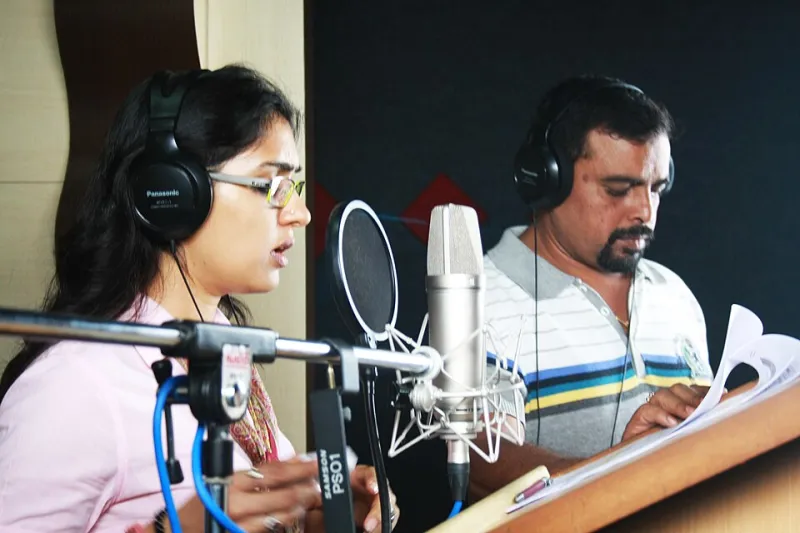
Photo: TeachAIDS from Stanford, California, USA, CC BY-SA 2.0, via Wikimedia Commons
There's a moment that happens at almost every one of Meiko Haigou's convention panels in the States. A fan will raise their hand, lean into the microphone, and say some version of the same thing: "I hated your character so much. And then I couldn't stop thinking about them."
Meiko smiles every time. Because that reaction — the loathing that curdles into obsession — is exactly what she's aiming for.
"A villain that people merely dislike is a failure," she told us over tea after a recent recording session in Los Angeles. "A villain that people hate and understand? That's the job."
The Warm-Up That Scares Her Neighbors
Before we get to philosophy, let's talk logistics. How does one actually prepare to voice someone awful?
Meiko's answer involves her apartment, a humidifier, and a series of laughs that she describes as "genuinely alarming." Her evil-laugh warm-up is legendary among her collaborators — a graduated scale that starts at a dry, breathy chuckle and climbs toward full theatrical menace.
"I do scales like a singer, but instead of la-la-la, it's ha-ha-ha — low register first," she explains, demonstrating at maybe thirty percent power. "The trick is that a good villain laugh isn't loud. It's amused. The character finds something funny that the audience doesn't yet. If your laugh communicates 'I know something you don't,' you've already won the scene."
She keeps a small notebook of laugh variations, annotated in pencil: jealous, tired, almost kind, this one hurt my throat, do not use two days in a row. It reads less like a voice actress's notebook and more like a sommelier's tasting journal — if the wine were pure menace.
Sympathy Is the Secret Ingredient
Ask Meiko about her approach to antagonists, and she'll tell you the word "villain" never appears in her preparation.
"I write a small biography for every character, even if it's three sentences long," she says. "Especially for the cruel ones. What did they lose? What do they tell themselves at night to sleep? Nobody wakes up thinking, 'Today, I will be the antagonist of someone's story.' They think they're the main character. So I play them as the main character."
She points to one of her early roles — a cold, calculating rival whose cruelty masked a fear of being forgotten. Meiko gave the character a barely audible exhale before her sharpest lines, a tiny hesitation the director almost cut.
"He said, 'Why does she hesitate? She's ruthless.' And I said, 'Because she wishes she weren't.' He kept the exhale. Fans noticed it. Fans always notice."
That's the through-line of her career: the belief that audiences reward specificity. A villain with a reason is scary. A villain with a wound is unforgettable.
The Fan Mail Problem (A Good Problem)
Here's something that surprises first-time convention-goers: Meiko receives a striking amount of fan mail addressed not to her, but to her characters.
"I have letters that begin, 'Dear [villain's name], I know you did terrible things, but—'" she laughs, miming holding a stack of envelopes. "One fan wrote a three-page apology to a character who betrayed everyone in the final arc. Three pages! And honestly, the argument was pretty persuasive."
She keeps every letter. The ones addressed to her villains go in a separate folder she calls — in English — "The Evidence."
"When I doubt whether a performance landed, I read The Evidence," she says. "Because a fan who writes to a fictional person to argue with them? That person was real to them. That's the highest compliment our work can receive."
At US conventions, she's noticed American fans engage with her antagonists in a distinctly earnest way — less ironic detachment, more "let me explain why they were right." She loves it.
"Japanese fandom and American fandom express love differently, but the instinct is identical," she says. "You want to redeem them. You want to write the fix-it fic. I read those too. Yes, I have an account. No, I won't tell you the handle."
Why She Keeps Saying Yes
After two decades, Meiko could easily coast on heroes and ingénues. She doesn't. Ask her which scripts excite her, and she scans for the character the pitch deck describes as "difficult."
"Every antagonist is a gift because they're allowed to be complicated," she says. "Heroes have to be likable. Villains get to be human. All the messy, contradictory, aching humanity gets funneled into the person the audience is supposed to boo. If I do my work honestly, the boo turns into something else by the final episode."
Something else — that's what she calls it. Not sympathy exactly. Something closer to recognition.
"The best compliment I ever received wasn't 'your villain was terrifying,'" she says, gathering her notes before heading back into the booth. "It was a young fan at a con in Texas who said, 'I hated her right up until I understood her. Then I hated myself a little.'"
She grins — a grin with just a hint of menace, professionally calibrated.
"That," she says, "is the job."
Have a letter for one of Meiko's villains? Bring it to her next convention panel — The Evidence folder is always accepting new submissions.