The Breath You Chose: Meiko Haigou on Ad-Libs That Earn Their Place
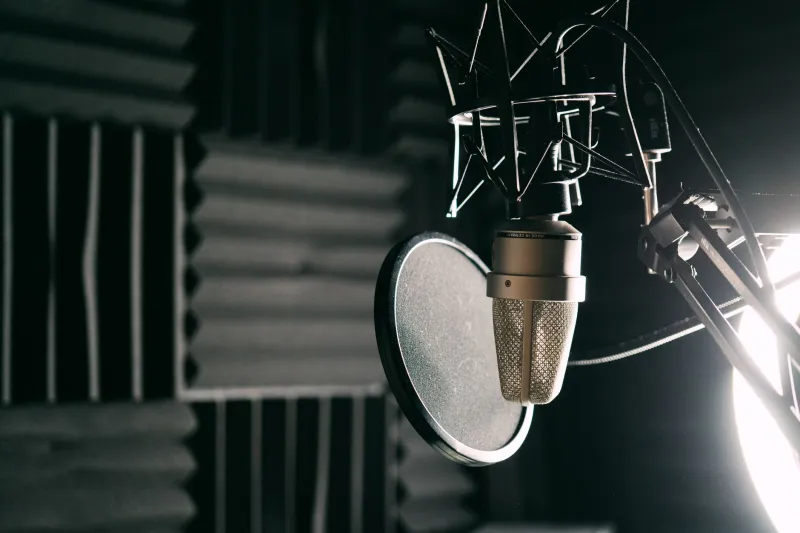
Ad-libs in English dubs get talked about like lightning: a sudden flash, a lucky strike, a moment nobody could have planned. Meiko Haigou has a different view. The ad-libs she remembers most are not accidents. They are choices made early, rehearsed quietly, and then delivered as if they just occurred to the character. The surprise is for the audience, not for the actor.
That distinction matters in a dubbing booth, where time is tight, the script is king, and one extra syllable can ripple through a scene. Meiko is not against improvisation. She is against accidental improvisation. A planned ad-lib, she says, is simply a small piece of acting that has been given a job and a boundary.
The test starts before the mic
Meiko's approach is practical rather than precious. Before a session, she marks her script in two colors: one for what the scene needs, one for what her character might try. The second color is where ad-libs live, but only as possibilities. Nothing is locked in until it passes her three-part test.
First, the addition has to belong to the character, not the actor. A breath before a confession can reveal hesitation. A half-laugh after a bad joke can show affection. A pop-culture reference from 2026 might get a laugh in the room and still be wrong for a fantasy noble. Meiko asks a simple question: would this person, in this world, make this sound? If the answer is no, the idea stays in the notebook.
Second, the ad-lib has to survive without the picture. Dubs are often heard first through headphones, clips, or convention screens, and a line that depends on a visual gag can collapse in audio. Meiko runs what she calls the kitchen test. If she were washing dishes and only half listening, would the extra beat still read as emotion rather than noise? A tiny sigh can carry. A clever muttered joke that needs a raised eyebrow usually cannot.
Third, the next actor has to inherit a clean take. This is the courtesy part, and Meiko treats it as seriously as any performance note. An ad-lib that steps on another character's cue, muddies a mixer's edit, or forces the director to choose between a laugh and a plot point is not a gift. It is a bill someone else has to pay. The best additions leave the runway clear. They make the scene feel fuller without making the next line harder to land.
Planned does not mean stiff
There is a misconception that a planned ad-lib will sound planned. Meiko disagrees. A prepared choice can feel more alive than a random one because the actor is not searching for it in the moment. They are free to play.
Her method is modest. She brings one alternate breath, one possible aside, and one small reaction to a session, never a stack of bits. She writes them in pencil, not ink. She tells the director what she is considering, because surprise in the booth is not the same as surprise on screen. Directors tend to welcome a focused option. They do not tend to welcome a performer who has decided the script is a suggestion.
Meiko also distinguishes between an ad-lib and a rewrite. An ad-lib is a breath, a pause, a tiny sound, a wordless reaction, or a short aside that fits the existing line. A rewrite changes meaning. If the added joke explains the plot better than the script does, that is a conversation, not a take. If the added line contradicts a later episode, that is a problem. The ad-lib is seasoning, not a second entrée.
When the cutting-room floor is the right home
Some ideas should stay out of the booth, and Meiko has a short list of warning signs. If the addition needs a footnote, it is probably too clever. If it only works as an inside joke for fans, it is probably too narrow. If it changes the character's mood for the next scene, it is probably too big. And if the only reason to keep it is that it made the booth laugh, that is not enough. The booth is not the audience.
She is also wary of meme-shaped ad-libs. A line that sounds funny in a clip may flatten a scene on a second watch. Meiko's rule is not anti-fun. It is pro-longevity. The ad-libs that age well tend to reveal character rather than announce the performer.
A small ritual for the booth
Meiko's pre-session ritual is almost boring, which is the point. She writes three things on a note card: what the character wants in the scene, what the temperature of the room is, and one possible breath that could carry both. That is it. No comedy set, no hidden monologue, no plan to steal the scene. The card keeps her honest.
Then she asks. A quick question to the director, a quick nod to the script supervisor, and the choice becomes part of the team's work instead of a solo stunt. In an English dub, where performances are built in pieces and edited later, that collaboration is what turns a small idea into a lasting moment.
The scripted spark is not a contradiction. It is craft. The audience hears a character reacting in real time. What they do not hear is the preparation: the breath chosen, the joke tested, the courtesy extended to the next actor in line. That is the kind of ad-lib Meiko Haigou trusts. It earns its place, and then it makes the scene feel like it could not have gone any other way.